
Positive Behaviour Support (PBS) has become an established framework across health and social care services for improving quality of life and reducing behaviours of concern. While PBS is often associated with learning disability services, it’s relevance within older adult care is increasingly recognised. As populations age and services support more people with dementia, mental health conditions, acquired brain injuries, and complex physical needs, PBS offers a compassionate and person-centred approach that can transform care experiences for people supported and staff.
However, applying PBS in older adult services requires thoughtful adaptation. The emphasis of assessment, intervention, and staff training may differ significantly from settings where PBS has previously been established. Older adults often present with unique biopsychosocial factors, including cognitive decline, grief and loss, physical health issue, sensory impairment, chronic pain, and reduced independence. Staff therefore need a specialised understanding of how PBS principles translate into later-life care environments where there may be behaviours of concern.
What is Positive Behaviour Support?
PBS is a values-led framework that combines behavioural science with person-centred practice. Its primary aim is to improve quality of life while reducing behaviours of concern. PBS focuses on understanding the function or purpose of behaviour, recognising that all behaviour communicates a need or response to an environment.
In older adult services, PBS may be used to inform the support to people experiencing distress, agitation, aggression, resistance to personal care, wandering, repetitive vocalisations, or self-neglect. Importantly, PBS reframes these behaviours not as “problems to manage” but as meaningful responses to unmet needs.
Why PBS Matters in Older Adult Services
Older adults in residential care, hospitals, supported living, and community services frequently experience situations that can increase distress. These include transitions into care settings, bereavement, loneliness, reduced autonomy, physical illness, medication effects, and cognitive impairment.
For people living with dementia, behaviours of concern are often expressions of fear, confusion, discomfort, or frustration. A person who repeatedly attempts to leave a care home may not simply be “wandering”; they may be searching for familiarity, purpose, or security. Someone resisting personal care may be communicating pain, embarrassment, trauma, or confusion.
PBS encourages staff to look beyond the behaviour itself and ask: “What is this person’s behaviour communicating about this situation?”
This shift in perspective can significantly reduce restrictive interventions, improve staff confidence, and enhance the dignity and wellbeing of older adults.
Key Differences in PBS for Older Adults
While the core principles of PBS remain the same, older adult services often require different areas of emphasis.
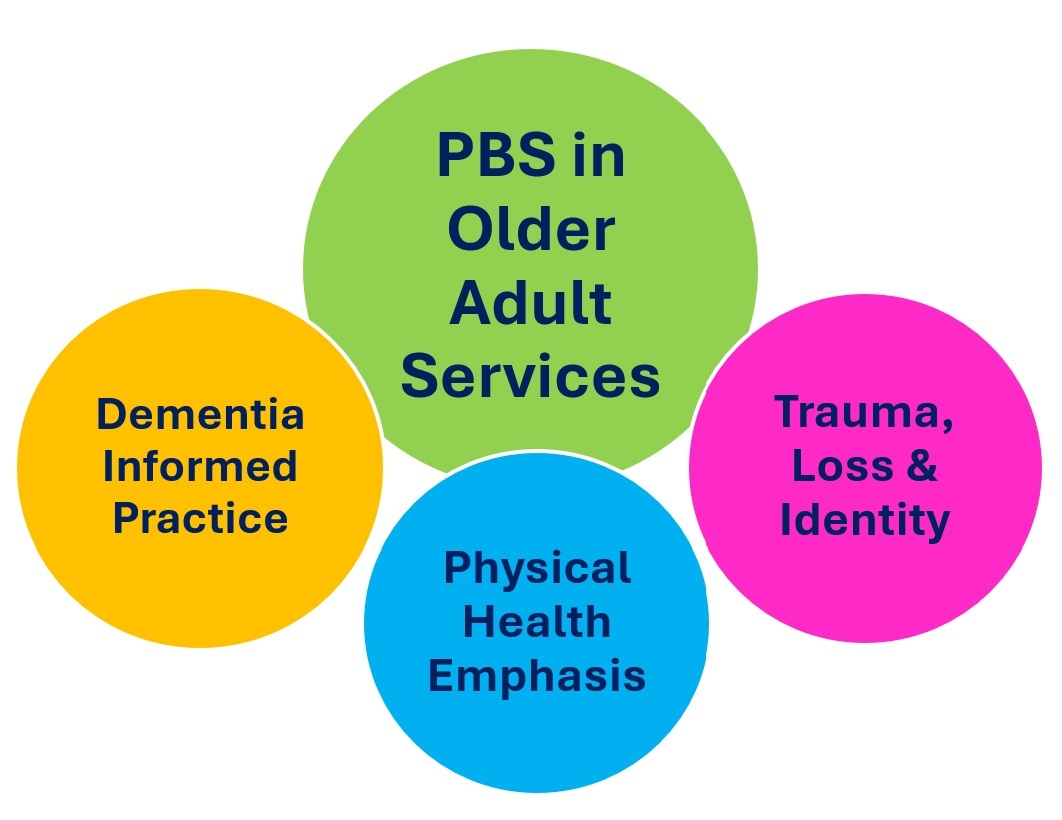
- Greater Focus on Health and Physical Wellbeing
Physical health plays a major role in the well-being and any behaviours of concern among older adults. Pain, urinary tract infections, constipation, dehydration, medication side effects, poor sleep, sensory loss, and mobility difficulties can all contribute to distress and behavioural changes.
Staff training in PBS therefore needs strong integration with physical health awareness. Care staff should be trained to recognise how unmet medical or sensory needs may influence behaviour and when to escalate concerns appropriately.
Unlike some traditional PBS settings, interventions may need closer collaboration with nurses, GPs, occupational therapists, physiotherapists, and dementia specialists.
- Dementia-Informed PBS Practice
A substantial proportion of older adult services support people living with dementia. This means PBS approaches must account for memory loss, impaired communication, reduced executive functioning, and changes in perception.
Training should include:
- Understanding dementia progression
- Validation and reassurance techniques
- Communication adaptations
- Managing distress without confrontation
- Environmental adjustments for orientation and safety
- Maintenance of skills
Therefore, the emphasis should include adapting environments, reducing distress triggers, and preserving remaining abilities and independence.
- Trauma, Loss, and Identity
Older adults may have experienced significant trauma throughout their lives, including abuse, institutionalisation, bereavement, or loss of independence. Moving into care can itself feel traumatic.
PBS training in older adult services should therefore include trauma-informed care principles. Staff need to understand how past experiences can influence responses to care, touch, authority figures, or unfamiliar routines.
Equally important is maintaining personal identity. Older adults may lose valued social roles, relationships, homes, and routines. PBS plans should prioritise meaningful activity, autonomy, and opportunities for connection rather than focusing solely on risk reduction.
Training Priorities for Staff in Older Adult Services
Several specific training priorities are essential, many of these are already part of a the PBS framework but there may need to be an increased and slightly different emphasis.
Relationship-Based Care
We all rely heavily on consistent relationships and emotional security. Training should emphasise empathy, attunement, active listening, and emotional connection.
Staff should understand that the quality of interactions can directly influence distress levels and behavioural outcomes.
Communication Skills
Communication difficulties are common in later life due to dementia, stroke, hearing impairment, or mental health conditions.
Training should focus on:
- Non-verbal communication
- Simplified language
- Active listening
- Validation approaches
- Recognising behavioural communication
The ability to slow down, observe carefully, and adapt communication styles is critical.
Environmental Awareness
The physical environment can strongly affect behaviour. Noise, clutter, poor signage, overstimulation, lack of privacy, or unfamiliar surroundings may increase confusion and distress.
Staff should learn how to create supportive environments that promote orientation, comfort, and independence.
Reflective Practice and Emotional Resilience
Working in older adult services can be emotionally demanding. Staff regularly encounter grief, decline, safeguarding concerns, and complex family dynamics.
Training should therefore include reflective practice and emotional resilience. Staff who feel supported are more likely to respond calmly and compassionately during challenging situations.
Supervision, debriefing, and psychologically safe team cultures are vital for sustaining good PBS practice.
Reducing Restrictive Practices
Older adults may be particularly vulnerable to restrictive interventions such as overmedication, physical restraint, or excessive control over routines.
Services should reinforce least restrictive principles and encourage proactive alternatives. Staff need confidence in de-escalation, environmental adaptation, and relational approaches that reduce reliance on restrictive responses.
Moving Toward Better Older Adult Care
As health and social care services evolve, PBS has an increasingly important role within older adult care. Its emphasis on dignity, understanding, and quality of life aligns closely with the values of compassionate ageing services.
However, successful implementation depends on recognising that older adult services are unique. PBS approaches must be adapted to reflect the realities of ageing, dementia, physical health complexity, trauma, and end-of-life care.
Most importantly, staff training must move beyond behaviour management alone. It should equip teams to understand the whole person behind the behaviour — their history, relationships, health, fears, strengths, and identity, as well as the function of or reason for the behaviour in that context.
When implemented thoughtfully, PBS can help older adults feel safer, more understood, and more connected. It can also help staff move from task-focused care toward truly person-centred support.
In a sector facing increasing complexity and demand, that shift has never been more important.
If you’re looking to establish PBS practices in older adult services, get in touch with us at info@redstonepbs.co.uk for a free session on Developing Your PBS Strategy.
Author

Kate Strutt – Director of Redstone PBS and Clinical Psychologist.
Kate has over 25 years experience of working with adults and children with intellectual disabilities and those who are autistic, both within statutory services and the independent sector. Kate is registered with the Health and Care Professions Council. Bsc Psychology, D.Clin Psyc, MSc Applied Behaviour Analysis.