
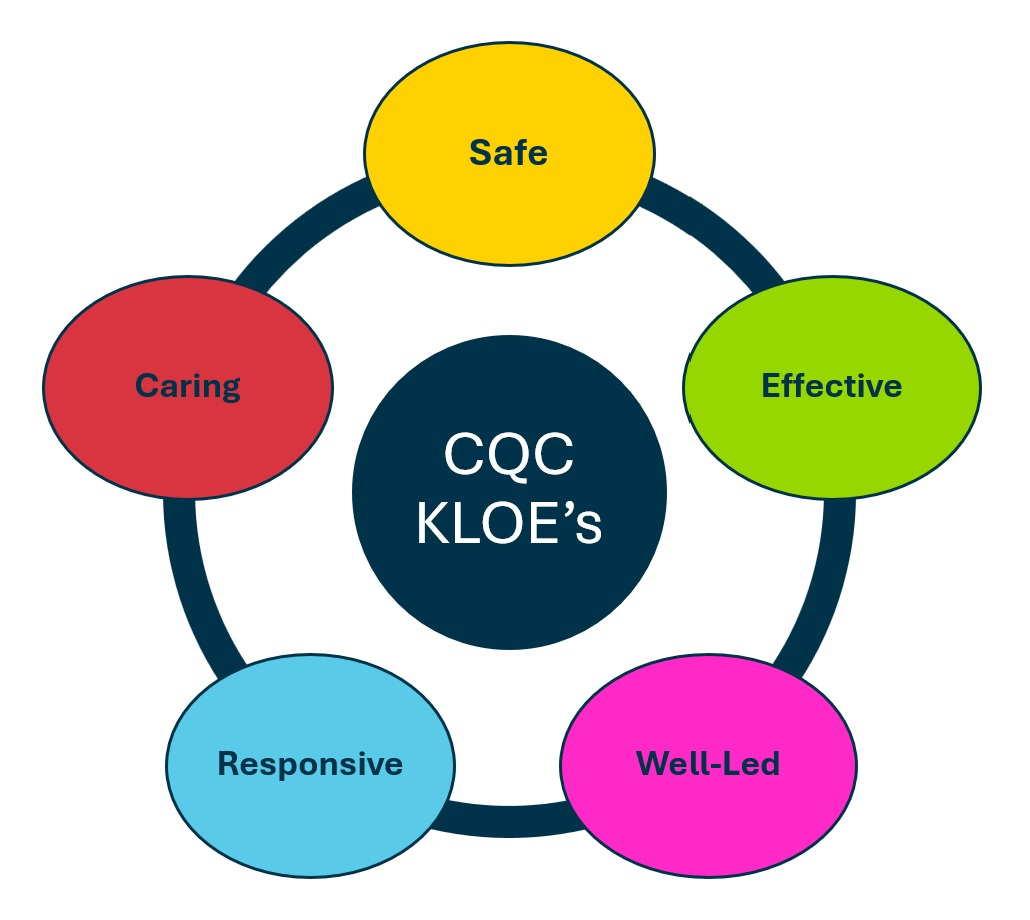
 Organisations can strengthen their service quality and improve inspection outcomes by understanding how PBS practices can support CQC KLOE’s and by embedding Positive Behaviour Support (PBS) practices into everyday care delivery. In today’s health and social care landscape, providers are under increasing pressure to demonstrate high-quality, person-centred care while meeting the expectations of the Care Quality Commission (CQC).
PBS is more than a behavioural framework. It is a values-led, evidence-based approach that improves quality of life, promotes independence, reduces restrictive practices, and supports individuals with complex needs in a compassionate and proactive way. Importantly, PBS aligns closely with the CQC’s Key Lines of Enquiry (KLOEs), making it a powerful tool for providers seeking to demonstrate compliance and excellence.
This blog explores how implementing PBS practices can directly support organisations in meeting and exceeding CQC expectations across the KLOE framework.
Positive Behaviour Support (PBS)
As a person-centred approach designed to understand the reasons behind behaviours of concern and to improve the individual’s quality of life, PBS is essential across many support settings. It combines behavioural science, human rights principles, and person-centred planning to create supportive environments where people can thrive.
Rather than focusing solely on reducing behaviours of concern, PBS seeks to ensure the right support is provided to a person as a primary support strategy, improving quality of life first. PBS then seeks to understand what a behaviour is communicating, commonly termed the function of the behaviour. It considers environmental factors, communication needs, sensory experiences, emotional wellbeing, and personal preferences to develop meaningful support strategies.
PBS is particularly relevant in services supporting individuals who may be at risk of presenting with behaviours of concern because of unmet needs. This may include people with learning disabilities, mental health issues, dementia, acquired brain injuries or autistic people
By focusing on prevention, proactive support, and skill-building, organisations can show how PBS can support CQC KLOE’s by creating safer and more empowering environments for both individuals and staff.
CQC assesses health and social care services using five key questions, commonly referred to as the KLOEs:
- Is the service Safe?
- Is the service Effective?
- Is the service Caring?
- Is the service Responsive?
- Is the service Well-led?
These questions form the foundation of inspections and determine whether a provider is rated Outstanding, Good, Requires Improvement, or Inadequate.
Establishing PBS practices can positively influence each of these areas.
PBS Supports “Safe” Care
Safety is a core priority for the CQC, and PBS contributes significantly to creating safer care environments.
When staff understand the root causes of behaviours of concern, they are better equipped to prevent escalation and respond appropriately. PBS reduces reliance on reactive approaches such as restraint, seclusion, or restrictive interventions by emphasising proactive strategies.
For example, a PBS-informed care plan may identify sensory triggers, communication frustrations, or environmental stressors that contribute to distress. Staff can then adapt routines, environments, or communication methods to minimise these triggers before incidents occur.
Establishing PBS helps organisations demonstrate:
- Reduced incidents and accidents
- Lower use of restrictive practices
- Improved safeguarding outcomes
- Better risk management processes
- Safer environments for individuals and staff
PBS also supports compliance with human rights and restraint reduction initiatives, both of which are increasingly important within CQC inspections.
PBS Enhances Effective Care
The “Effective” KLOE examines whether care achieves good outcomes, is evidence-based, and helps individuals maintain quality of life.
PBS is rooted in evidence-based practice and measurable outcomes. Support strategies are informed by functional assessments, behavioural data, and ongoing review processes. This structured approach helps providers demonstrate that care interventions are both purposeful and effective.
Effective PBS implementation can lead to:
- Improved emotional wellbeing
- Greater independence and life skills
- Better communication outcomes
- Increased participation in community activities
- Enhanced mental and physical health outcomes
As well as establishing systems and processes which are PBS informed, staff training is another important factor. PBS encourages continuous learning, reflective practice, and skill development among teams. Well-trained staff are more confident, consistent, and capable of delivering high-quality support.
CQC often looks for evidence that staff understand individuals’ needs and can deliver care effectively. PBS provides a clear framework for achieving this through training and well written PBS plans.
PBS Promotes Caring Relationships
The “Caring” KLOE focuses on compassion, dignity, respect, and person-centred care. PBS naturally aligns with these principles because it places the individual at the centre of all support planning.
A PBS approach encourages staff to:
- Build trusting relationships
- Listen to individuals and families
- Respect communication preferences
- Promote choice and control
- Recognise strengths and aspirations
Rather than seeing behaviours as “problems,” PBS encourages teams to understand the person and their behaviour. This shift in perspective fosters empathy and improves the overall culture of care.
Individuals supported through PBS are more likely to experience, greater dignity and respect, increased autonomy, improved emotional security, more meaningful engagement with staff. Families and advocates also often report feeling more involved and reassured when PBS practices are embedded consistently across a service. These outcomes strongly support the caring standards expected during CQC inspections.
PBS Improves Responsiveness
Responsive care means tailoring support to meet individual needs and adapting when those needs change.
PBS is inherently responsive because it relies on continuous assessment, monitoring, and review. Support plans evolve alongside the individual, ensuring care remains personalised and relevant.
For example, if a person begins displaying increased anxiety in certain settings, PBS encourages teams to investigate why this change is happening rather than simply reacting to the behaviour itself. This may involve reviewing communication methods, health concerns, environmental factors, or staffing approaches.
PBS also promotes active participation from the individual and those important to them, ensuring support plans reflect personal goals, cultural needs, and lifestyle preferences.
Services using PBS effectively can demonstrate:
- Personalised care planning
- Regular review processes
- Adaptability to changing needs
- Meaningful involvement of service users
- Better outcomes through tailored interventions
These are all key indicators of responsive care within the CQC framework.
PBS Strengthens Leadership and Culture
Strong leadership is essential for successful PBS implementation, making it highly relevant to the “Well-led” KLOE.
Embedding PBS requires organisations to develop cultures built on respect, learning, collaboration, and continuous improvement. Leaders play a crucial role in ensuring PBS values are reflected in policies, staff training, supervision, and service delivery.
A well-led PBS service typically demonstrates:
- Clear organisational values
- Strong governance and oversight
- Commitment to reducing restrictive practices
- Ongoing staff development
- Effective quality assurance systems
- Open communication and reflective practice
When leaders champion PBS, it creates consistency across teams and encourages accountability at every level.
CQC inspectors often assess whether a provider has a positive culture that prioritises person-centred care and learning. PBS offers a clear operational framework to evidence this.
Demonstrating PBS During a CQC Inspection
Having PBS principles in place is valuable, but providers must also be able to demonstrate their impact during inspections.
Useful evidence may include:
- PBS assessments and support plans
- Behaviour data and incident analysis
- Restrictive practice reduction records
- Staff training and competency records
- Quality-of-life outcome measures
- Service user feedback
- Family and advocate involvement
- Reflective practice documentation
Inspectors are increasingly interested in how organisations promote human rights, reduce restrictive interventions, and improve individual outcomes. Strong PBS systems provide clear evidence in all these areas.
Final Thoughts
This blog has shown how PBS practices can support CQC KLOE’s through looking at each of the KLOE’s. Positive Behaviour Support is not simply a nice addition in services or only essential where people with complex behavioural presentations are supported. It is a transformative approach that improves lives, strengthens staff practice, and creates healthier organisational cultures across any service supporting people with a range of needs.
For providers navigating the demands of CQC inspections, PBS offers a practical and values-driven framework that aligns naturally with all five KLOEs. From improving safety and effectiveness to enhancing leadership and person-centred care, PBS helps organisations move beyond minimum standards toward truly outstanding care delivery.
As the health and social care sector continues to evolve, providers that invest in robust PBS practices will be better positioned to demonstrate quality, achieve positive inspection outcomes, and most importantly, deliver compassionate support that empowers the people they serve.
Practice Tip: Corss references all the PBS practices that you currently have in place with our sections on each of the KLOE’s to see where you might have some gaps. If you are at the start of your PBS journey, we have a range of training and consutlancy offers which can help move your PBS strategy forwards. Get in touch with us at info@redstonepbs.co.uk for a free session on Developing Your PBS Strategy.
Author
Kate Strutt – Director of Redstone PBS and Clinical Psychologist.
Kate has over 25 years experience of working with adults and children with intellectual disabilities and those who are autistic, both within statutory services and the independent sector. Kate is registered with the Health and Care Professions Council. Bsc Psychology, D.Clin Psyc, MSc Applied Behaviour Analysis.