
Positive Behaviour Support (PBS) has become a cornerstone of person-centred, evidence-based approaches to supporting people who may be vulnerable to presenting with behaviours of concern. At its core, PBS is not just about strategies or interventions—it is about creating environments, relationships, and skills that empower people to thrive. Yet, even the most carefully designed strategies and plan can fall short if staff teams supporting people struggle to implement them effectively.
This is where coaching strategies play a critical role. Coaching provides ongoing guidance, feedback, and reflective practice that strengthens staff capabilities, ensures consistency, and ultimately improves outcomes for people receiving support.
In this blog, we explore why coaching matters in PBS, how it enhances practice, and practical approaches to embedding coaching strategies into everyday support.
Understanding the Role of Coaching in PBS
Coaching is often misunderstood as a formal, one-off training session. While it can be part of a formal process or a service initiative, in reality, effective coaching is an ongoing, reflective, and collaborative process that bridges the gap between theory and practice, or between a written support plan and the actual support delivered. It involves:
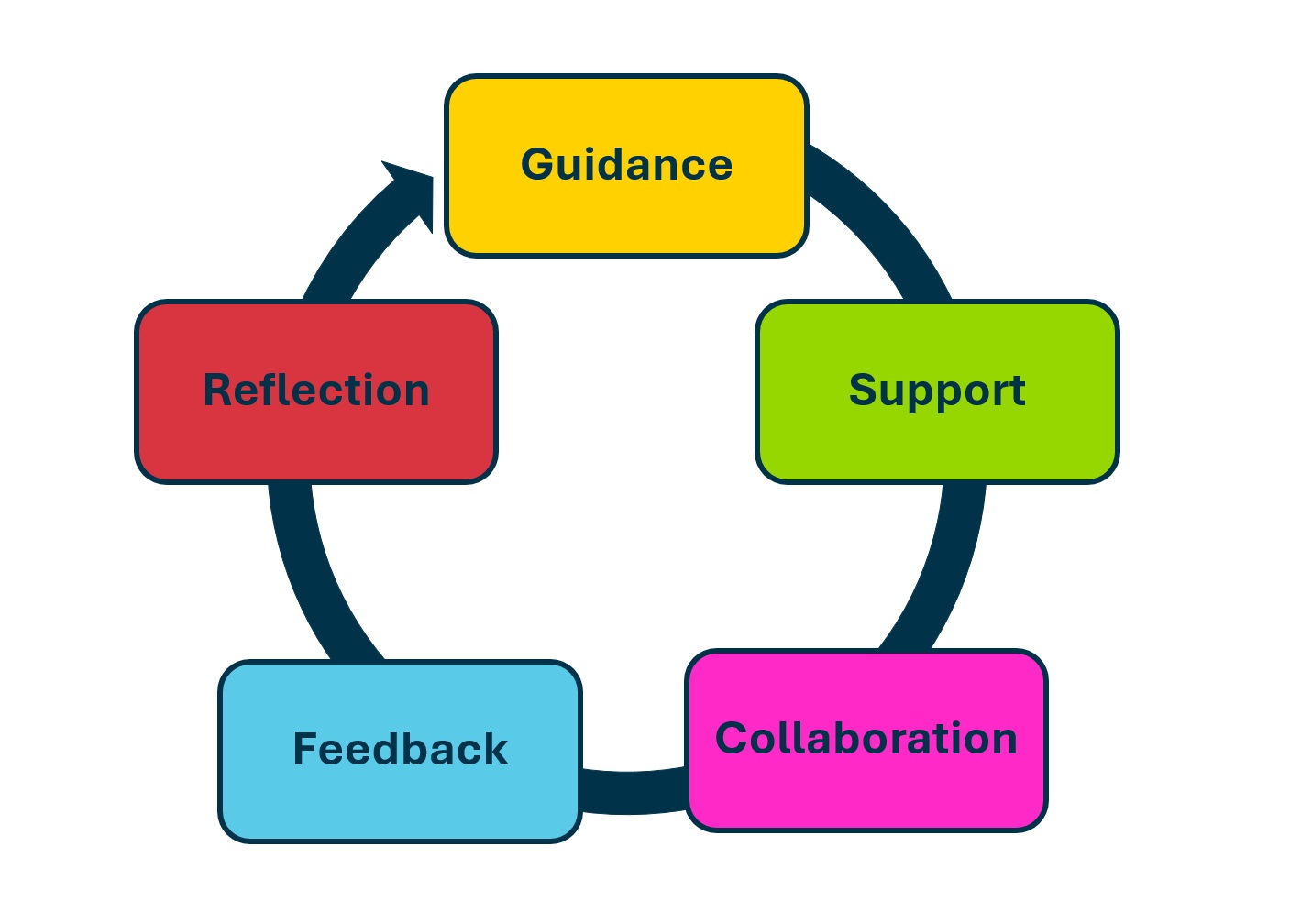
- Guidance: A clear agreed strategy or plan.
- Support: Providing a positive supporting environment to build confidence and reducing anxiety.
- Collaboration: Working together with the person support, staff team and the coach
- Feedback: Providing positive feedback and agreeing changes to approach.
- Reflection: Encouraging reflection on what worked and why.
In the context of PBS, coaching ensures that strategies are not simply written down or talked about but supported in action. It’s very easy for misunderstandings to occur about what might have been planned and discussed in a team meeting or a supervision and what that actually looks like in practice.
Why Coaching Matters in PBS
- Enhances Skill Acquisition and Confidence
PBS strategies often involve complex skill sets, including relational skills that need to be slightly different depending on who is supported, as well as the skills of managing the practical logistics of a situation. New or less experienced staff may struggle to implement specific strategies consistently without guidance.
Coaching provides opportunities for hands-on practice, observation, and feedback. This continuous support builds confidence in implementing a specific support strategy, beyond what is written down and helps staff to adapt PBS strategies flexibly to meet individual needs.
- Promotes Consistency Across Teams
Consistency is a key principle of PBS. When different staff apply strategies in varying ways, it confusing for people supported, increasing stress, and reducing the effectiveness of behaviour support plans.
Coaching ensures that staff across teams:
- Understand the rationale behind interventions
- Apply strategies consistently across environments
- Share insights and experiences to refine approaches
This consistency improves predictability for individuals, supports skill generalisation, and strengthens positive behaviour outcomes. What is easier? Being supported to do a task in 10 different ways by 10 different people, or the same way regardless of who is supporting you? I know which I would choose.
- Encourages Reflective Practice
PBS is not a static model—it requires reflection, observation, and adjustment. Coaching fosters reflective practice, encouraging staff to ask critical questions such as:
- Is this support approach working for this person?
- Did my response help the person?
- How could I adjust the environment to prevent issues arising for the person?
- Is there a better way to support this person with this situation?
By embedding reflection into practice, coaching helps staff move from reactive responses to proactive, evidence-informed interventions.
- Supports Staff Well-Being
Working with people who might present with behaviours of concern can be emotionally demanding. Stress, burnout, and compassion fatigue are common among support staff.
Coaching provides a safe space to gain support for challenging situations and work collaboratively towards solutions. It reinforces that staff are not alone in their responsibilities, which improves morale, resilience, and overall well-being. Healthy, supported staff are better able to deliver high-quality support.
- Facilitates Person-Centred, Ethical Practice
Coaching emphasises the person-centred ethos of PBS. Rather than focusing solely on reducing behaviours of concern, coaching encourages staff to consider:
- The individual’s preferences, goals, and strengths
- Environmental adaptations that support engagement
- Empowerment and choice in interventions
Through coaching, staff learn to implement PBS in ways that respect autonomy and dignity, ensuring ethical, sustainable practice.
Practical Strategies for Embedding Coaching in PBS
To make coaching effective, organisations need to adopt structured yet flexible strategies:
- Observation and Feedback
Supervisors or coaches observe staff supporting someone and provide specific feedback. Feedback should focus on strengths, areas to try differently, and next steps for practice refinement.
- Role-Playing and Simulation
Practising interventions in controlled or simulated scenarios allows staff to build confidence before applying strategies in live situations.
- Scheduled Reflective Supervision
Regular reflective 1:1 sessions create dedicated space to review support, discuss challenges, and celebrate successes. This structured reflection is essential for embedding learning.
- Peer Learning and Collaborative Reflection
Encouraging team discussions and peer-to-peer coaching fosters shared learning, ensures consistency, and builds a supportive culture.
- Ongoing Training Integration
Coaching should complement formal training rather than replace it. Workshops, modules, and refresher sessions combined with on-the-job coaching reinforce knowledge and skill transfer.
Case Example: Coaching in Action
A young person loved to visit a local trampoline park. However, the team supporting him were struggling to manage the point at which he had to move past a shop where there were many drinks and snacks that he liked. On some occasions this was managed really well, with clear communication with previously purchased snacks being presented. However, at other times the situation resulted in the young person pushing staff and grabbing items. It was clear that a slightly different approach was being used by different team members. A support strategy was written by the PBS lead who had experience of supporting the young person.
Through coaching, the PBS Lead:
- Observed different teams implementation of the strategy
- Gave real-time guidance and modelling on the strategy
- Clarified specific triggers and environmental adjustments needed
- Encouraged reflection with each team member
- Celebrated with the team when they implemented the strategy successfully
Very quickly, the team who has been low in confidence in supporting this activity, with some questioning if it was too risky, became consistent in their approach and their confidence increased. This example shows how support staff growth and confidence lead to better outcomes for people supported.
Conclusion
The power of coaching lies in its ability to transform PBS from a set of strategies into lived, high-quality practice. By providing guidance, feedback, and reflective support, coaching ensures staff have the skills, confidence, and resilience to implement PBS effectively and ethically.
Coaching supports staff well-being, promotes consistency, encourages reflective practice, and fosters person-centred, proactive approaches to behaviour support. Services that invest in coaching not only improve outcomes for individuals receiving support—they also cultivate a culture of learning, collaboration, and professional excellence.
In short, coaching is the bridge between knowledge and effective practice, enabling Positive Behaviour Support to achieve its full potential.
Redstone Tips – consider the following questions.
- Where is a lack of consistency leading to behaviours of concern and staff stress?
- Do your teams have access to coaching support?
- What does your organisation have in place for service leads and managers to be able to develop coaching skills?
If you would like to learn more about our PBS Coaching in Practice and Active Support Coaching in Practice Programmes, both of which include theory and practice around coaching please get in touch info@redstonepbs.co.uk or call 0161 327 4511
Author

Kate Strutt – Director of Redstone PBS and Clinical Psychologist.
Kate has over 25 years experience of working with adults and children with intellectual disabilities and those who are autistic, both within statutory services and the independent sector. Kate is registered with the Health and Care Professions Council. Bsc Psychology, D.Clin Psyc, MSc Applied Behaviour Analysis.