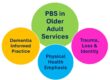

A key element of using the PBS approach effectively is understanding the multi-element approach in positive behaviour support . This aspect of PBS recognises that behaviour is:
- Complex and meaningful
- Influenced by multiple interacting factors
- Linked to the individual’s needs and the support environment
As a result, effective positive behaviour support requires addressing multiple elements simultaneously, rather than relying on a single strategy.
Why a Multi-Element Approach Is Necessary
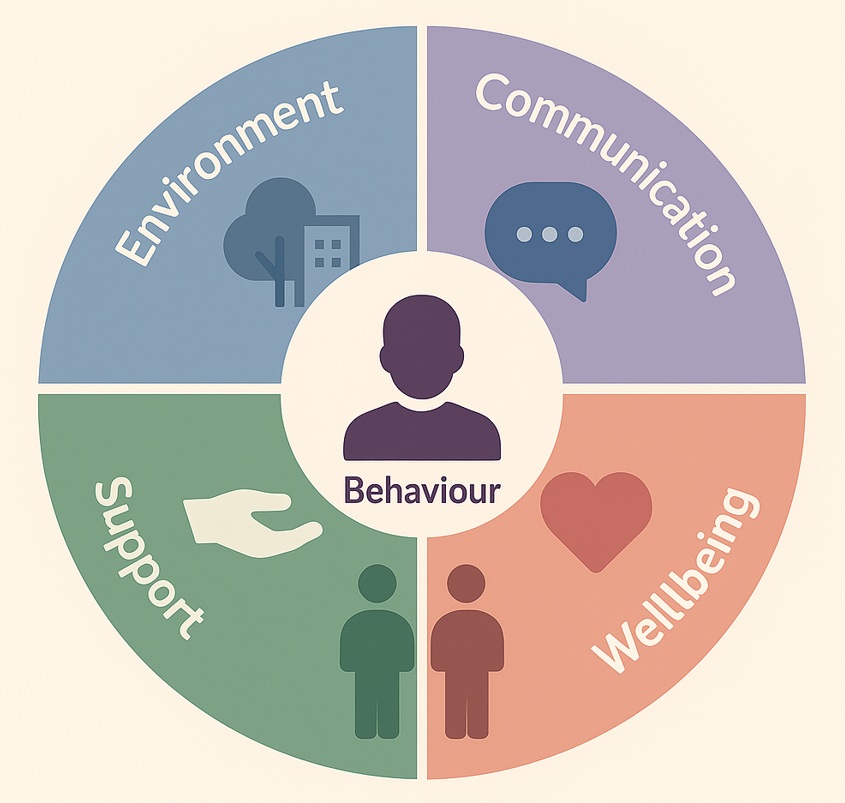
Behaviour does not happen in isolation. It is influenced by, environment and routines, communication abilities, physical and emotional wellbeing, relationships and past experiences, available support systems.
Focusing only on the behaviour itself may reduce it temporarily but rarely leads to lasting change. It can also:
- Increase challenges for staff or caregivers
- Reduce the person’s overall well-being
The multi-element approach seeks to understand why behaviour occurs and address these factors holistically. At the core of PBS is functional behaviour assessment (FBA), which explores the purpose or function of a behaviour. Behaviours often serve needs such as:
- Gaining attention or social interaction
- Accessing preferred items or activities
- Escaping demands or tasks
- Regulating sensory input
Understanding the function of behaviour allows the team to design support strategies that meet needs in more appropriate ways.
Proactive & Preventative Strategies
A key element of the multi-element approach is prevention. Proactive strategies reduce the likelihood of behaviours of concern by both addressing antecedents—the events that occur before a behaviour and teaching the person new skills.
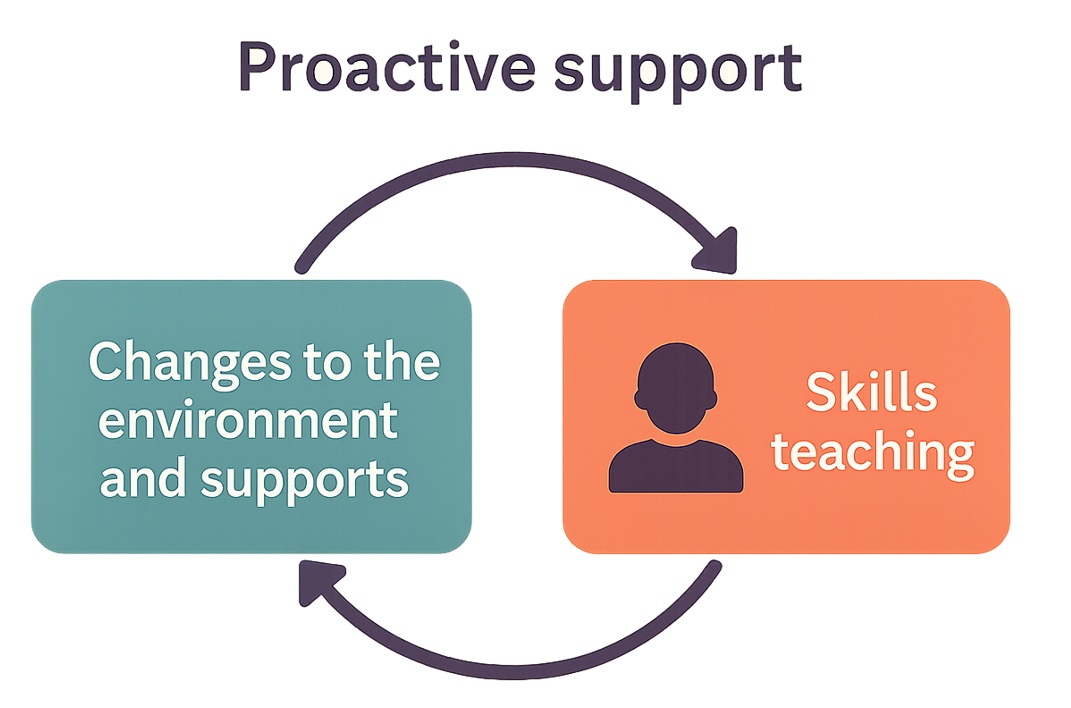
- Changes to the Environment and Supports
Proactive strategies might include providing predictable daily schedules, offering meaningful choices, adjusting a task, ensuring instructions are clear and accessible.
For individuals with sensory sensitivities, adjustments can include reducing noise, improving lighting, offering sensory breaks.
Proactive strategies also consider basic needs such as, sleep, nutrition, physical and emotional health
These changes help create an environment that ensures that the needs of the person are more effectively met.
- Teaching New Skills
When a behaviour serves a function, the individual needs an alternative way to achieve the same outcome. Skill-building may focus on:
- Communication strategies, such as verbal skills or Makaton
- Coping strategies
- Social interaction skills
- Skills that support independence and autonomy
Examples: Teaching a person to ask for help or request a break instead of engaging in challenging behaviour or supporting a person to seek attention in socially appropriate ways
Key points for effective skills teaching:
- Skills must be taught in meaningful contexts
- Practice should be consistent across different environments
- The environment must support the use of newly learned skills
Effective Responses from the Environment
Behaviour that is followed by meaningful positive outcomes is more likely to occur again. Therefore, the environment must respond consistently to support the use of new skills.
Case Example:
- A young woman with a significant learning disability and limited verbal speech was frequently displaying behaviours of concern.
- It was discovered that she had a wide range of Makaton signs, but her team was unaware and did not use them to communicate with her.
- Once the team learned her signs and began using them consistently, communication improved, her skills developed further, and behaviours of concern reduced.
This example highlights the importance of responsive environments in supporting skill use and reducing behaviours of concern.
How the Elements Work Together
The multi-element approach is effective because the elements interact and reinforce each other.
Example continuation:
- Alongside Makaton communication, the young woman benefited from:
- Predictable routines
- Engagement in meaningful activities while waiting for preferred events (e.g. dinnertime or going out to a favourite shop)
Implementing skill-building alone would have only partially met her needs. By combining environmental supports and skill development, the team could address multiple needs simultaneously and reduce the likelihood of behaviours of concern.
Reactive Strategies: Supporting Safety
Even with proactive strategies, behaviours of concern may still occur. Reactive strategies focus on responding in a safe, calm, and respectful way: They often include
- De-escalation techniques
- Redirection to preferred activities
- Following agreed safety procedures
- Maintaining the person’s dignity and respect
Clear reactive strategies, ensure consistency, reduce risk, provide guidance and confidence for staff.
Key Takeaways
The multi-element approach in PBS:
- Recognises that behaviour is complex and meaningful
- Addresses behaviour holistically rather than reactively
- Combines proactive environmental changes, skill development, and reactive strategies
- Ensures interventions are ethical, sustainable, and effective
Conclusion
The multi-element approach in Positive Behaviour Support reflects an understanding of human behaviour as complex, meaningful, and influenced by many factors. By combining proactive environmental changes, skill development, and respectful reactive strategies, PBS creates ethical, and effective support.
Redstone Tips – consider the following questions.
- How well does your organisation currently address the multiple factors influencing behaviour?
- Are behaviours being understood only as challenges, or are their underlying needs being explored?
- How consistently are proactive strategies applied across your team?
Ensure you and your teams have a clear understanding of how to implement the PBS multi-element approach through our comprehensive range of PBS training
Author

Kate Strutt – Director of Redstone PBS and Clinical Psychologist.
Kate has over 20 years’ experience of working with adults and children with intellectual disabilities and those who are autistic, both within statutory services and the independent sector. Kate is registered with the Health and Care Professions Council. Bsc Psychology, D.Clin Psyc, MSc Applied Behaviour Analysis.